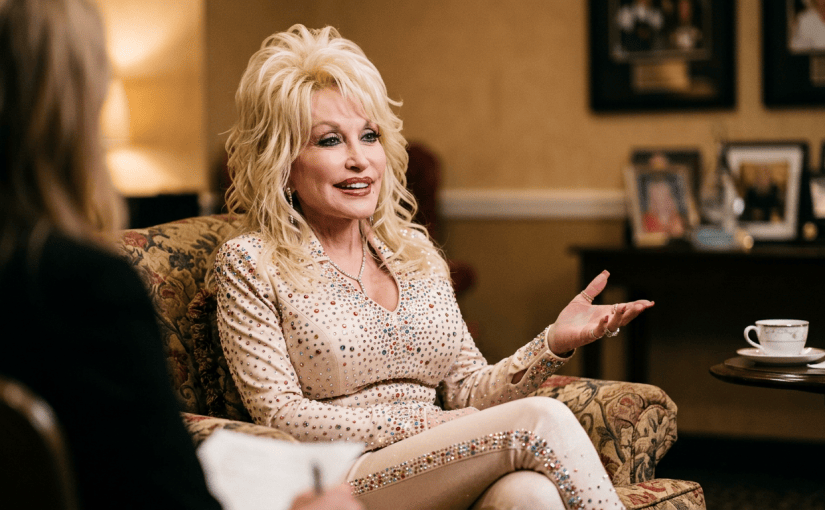
Few names in music are as instantly recognizable as Dolly Parton. With a career spanning more than six decades, she has become one of the most successful and influential figures in country music.
As a singer, songwriter, musician, actress and businesswoman, Dolly has built an extraordinary legacy – but it is her songwriting that remains at the heart of her success.
From emotional country ballads to worldwide pop hits, Dolly Parton songs have been recorded by some of the biggest artists in the world. Her ability to turn ordinary experiences into unforgettable stories has made her one of the most respected songwriters of all time.
The early life of Dolly Parton
Born in 1946 in Sevier County, Tennessee, Dolly grew up in a large family in the Great Smoky Mountains. Money was scarce, but music played an important role in her childhood.
She began writing songs at a remarkably young age, drawing inspiration from her family, her surroundings and the experiences of growing up in rural Tennessee. These early influences would become a defining part of her songwriting style.
Parton’s songs often focus on universal human experiences; love, heartbreak, family, poverty, ambition and hope. Although many of her stories are rooted in her own life, they connect with audiences because the emotion behind them are so familiar.
Dolly Parton the songwriter
One of the great strengths of Dolly Parton’s songwriting is her ability to communicate complicated emotions using remarkably simple language.
A perfect example is Coat of Many Colours. Inspired by a coat made for her by her mother from scraps of fabric, the song tells a story about childhood poverty. Yet the central message isn’t really about the coat, it is about family, love and finding pride in what you have rather than what you lack.
Another famous example is Jolene. Released in 1973, the song tells the story of a woman pleading with another woman not to take the man she loves. The premise is simple, but Dolly’s lyrics create an extraordinary sense of vulnerability and tension.
The repeated name in the chorus of Jolene became one of the most recognisable hooks in country music
But perhaps the most famous of all of her songs is I will always love you. Parton originally wrote the song in 1973 as a farewell to country singer Porter Wagoner when their professional partnership was coming to an end. Her own recording became a major country hit.
Years later, Whitney Houston recorded the song for the film The Bodyguard, transforming it into one of the biggest-selling singles in music history.
The success of Whitney Houston’s version introduced Dolly’s songwriting to an enormous international audience and demonstrated the remarkable strength of the song itself. At its core, the composition is simple: a farewell between two people who still care deeply about one another.
Dolly Parton’s influence on country music
Dolly Parton’s influence reaches far beyond her own recordings. Her songs have been covered by artists across country, pop, rock and other genres.
This versatility is one of the reasons her music has remained relevant for so long. A great song can survive changes in production, fashion and musical trends. Parton’s strongest compositions have exactly that quality.
For aspiring songwriters, her career provides an important lesson. Great songwriting doesn’t necessarily require complicated musical arrangements or elaborate lyrics. A powerful story, a memorable melody and genuine emotion can be enough.
Why Dolly Parton’s music still matters
More than 50 years after some of her best-known songs were first released, Dolly Parton’s music continues to attract new generations of listeners.
Part of that longevity comes from her extraordinary ability to tell stories. Her songs are populated by real people facing recognizable problems and emotions. Whether she is writing about working life, romantic jealousy, childhood memories or saying goodbye to someone she loves, there is always a strong human element.
Her remarkable career has also helped bring country music and Nashville songwriting to audiences around the world.
And finally, the lasting legacy
Dolly Parton is much more than a country music star. She is a songwriter whose compositions have become part of the wider musical landscape.
Her legacy is unquestionable. The world is much richer because of her work and commitment to telling compelling stories. For many people, including myself, Dolly, ‘I will always love you’.
By Norman Thomson

