Every so often, I like to reflect on a specific song or piece of music. I was watching television yesterday, about the upcoming Scottish Parliament elections, when this particular song came to mind.
The haunting melody of “The Skye Boat Song” has drifted across generations, carrying with it echoes of history, loss and resilience.
Though many people today recognise the song as a traditional Scottish folk tune, or even as the theme from modern television, it is deeply rooted in one of the most turbulent chapters of British history: the Jacobite uprisings of the 18th century.
At its heart, “The Skye Boat Song” tells the story of escape. The lyrics recount the plight of Bonnie Prince Charlie, Charles Edward Stuart, after his crushing defeat at the Battle of Culloden in 1746.
The Jacobites, who supported the restoration of the Stuart monarchy to the British throne, had rallied behind Prince Charlie in a final and desperate attempt to overturn the ruling Hanoverian dynasty. Culloden marked the end of that dream. The Jacobite cause was effectively destroyed, and what followed was a brutal suppression of Highland culture, identity and clan structure.
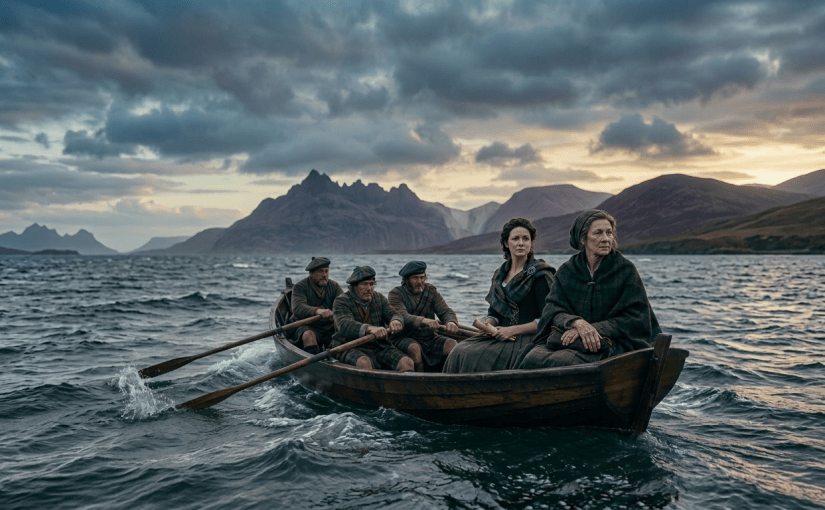
Amid the devastation at Culloden, the prince became a fugitive. With government forces hunting him, he fled through the Highlands, aided by loyal supporters. One of the most famous episodes of his escape involved Flora MacDonald, who helped the prince evade capture by disguising him as her maid. Prince Charlie and Flora sailed ‘over the sea’ to the island of Skye. It is the journey that forms the emotional and narrative backbone of “The Skye Boat Song”.
The song’s melody is believed to be from an older Gaelic tune, but the lyrics most commonly sung today were written by Sir Harold Boulton in the 1880s. The gap between the event at Culloden and the composition is important, because it shows how the Jacobite story moved from political rebellion into a romantic legend. By the Victorian era, the failed uprising was no longer viewed solely as an act of treason against the monarchy, but as a symbol of loyalty, bravery and loss.
The opening line of the song: ‘Speed, bonnie boat, like a bird on the wing, onward the sailors cry’, immediately establishes a sense of urgency and motion. The sea becomes a symbolic pathway to safety.
Yet beneath the beauty of the song lies a deep melancholy. ‘Many’s the lad fought on that day, well the claymore could wield’ recalls the fallen Jacobite soldiers, emphasising that the prince’s escape came at a terrible cost. The rebellion may have failed, but the courage of those who fought and died lingers in the song’s memory. It is this duality that gives the song its enduring emotional weight.
The Jacobites occupy a complex place in British history. Their cause was rooted in loyalty, but it also became intertwined with Highland identity and resistance to external control. After Culloden, the British Government imposed changes that would dismantle clan culture, including banning traditional dress such as tartan, and disarming the Scottish population. Songs such as “The Skye Boat Song” took on enormous cultural significance, becoming ways to preserve cultural memory.
Over time, the song has evolved beyond it historical significance. It has been adapted, translated into Gaelic, and performed in countless styles, from orchestral arrangements to contemporary interpretations. Each version brings out different facets of its character, sometimes tender and soothing, and sometimes reflective and somber.
Despite the variations in performance, the core story of the song remains: a reminder of a young prince on the run following massive defeat, and of the people who risked everything to help him and the cause.
What makes “The Skye Boat Song” particularly compelling is how it bridges past and present. Even listeners unfamiliar with the Jacobite uprisings can feel its emotional pull. The themes it touches on – loss, loyalty, exile and hope – are universal. Yet for those who know its history, the song resonates on a deeper level, serving as a quiet tribute to a defining moment in Scottish history.
“The Skye Boat Song” is more than just a piece of music. It is a story set to melody, a reflection of how history is remembered and reimagined. Through its gentle rhythm and evocative lyrics, it keeps alive the spirit of the Jacobites, as a symbol of endurance and identity. As long as it continues to be performed, the journey ‘over the sea to Skye’ will never truly fade into silence.
Speed, bonnie boat, like a bird on the wing
Onward, the sailors cry!
Carry the lad that’s born to be King
Over the sea to Skye.
Burned are our homes, exile and death
Scatter the loyal men.
Yet ere the sword cool in the sheath
Scotland will rise again!
By Norman Thomson
Discover more from NGT Music
Subscribe to get the latest posts sent to your email.


