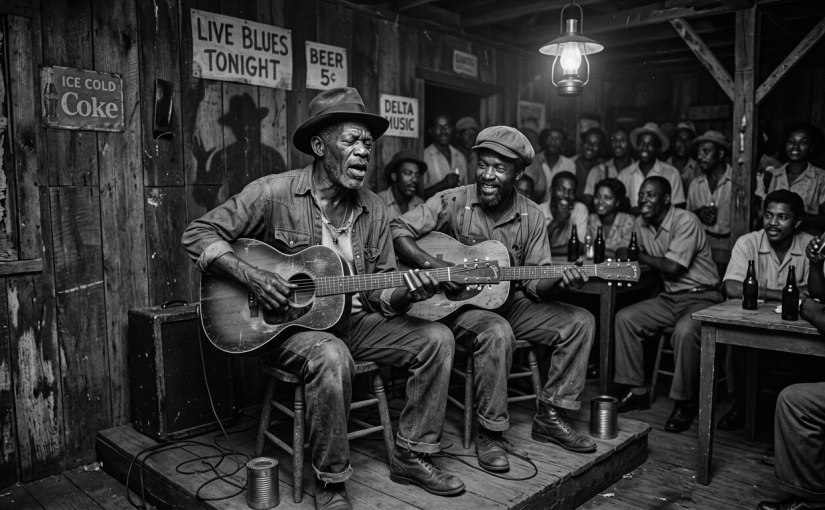
The 12-bar blues is one of the most influential and enduring structures in modern music. Root in African American musical traditions of the late 19th and early 20th centuries, it became the backbone of blues and went on to shape rock, jazz and pop. Despite its simplicity, the 12-bar progression offers enormous potential for creativity, expression and improvisation.
At its core, the 12-bar blues follows a repeating chord progression spanning twelve measures, typically divided into three groups of four. It is built around three primary chords: the I (tonic), IV (subdominant), and V ( dominant). In the key of C Major, the progression would be C, F and G, often in the form:
C – C – C – C
F – F – C – C
G – F – C – G
The predictable framework makes it easy for musicians to play together, especially in jam settings. While the chord structure remains consistent, elements like rhythm, tempo, and phrasing can vary widely, allowing each performance to feel fresh and unique.
Lyrically, traditional blues songs often use an AAB structure, where a line is sung, repeated and then answered or resolved in the third line. This pattern reinforces emotional themes, with the early blues centered on hardship, resilience and personal struggle.
Classic examples of the 12-bar blues progression can be found throughout music history. “Hound Dog” by Elvis brought the blues structure into early rock and roll. “Johnny B. Goode” by Chuck Berry showcased the format with energetic guitar playing.
Another great example of the structure being used for capturing emotional depth is “Sweet Home Chicago” by Robert Johnson, while “Boom Boom” by John Lee Hooker shows how the format can be adapted and personalised.
The 12-bar blues progression played a major role in the British rock movement. The Rolling Stones, Eric Clapton and the Beatles experimented with the structure, particularly with improvisation. Songs such as “Little Red Rooster” and “Can’t Buy Me Love” are great songs to study to discover how these bands adapted the structure.
Importantly, the 12-bar blues is not just a relic of the past; it continues to thrive in contemporary music. Artists across the genre still draw on its structure today. The White Stripes use blues-inspired 12-bar patterns in songs such as “Ball and Biscuit”, where they blend raw garage rock with traditional blues roots. Gary Clark Jr incorporates modern blues-rock elements into tracks like “Bright Lights”, where the 12-bar framework underpins gritty guitar riffs and soulful vocals.
In a more pop-influenced direction, Amy Winehouse often drew on blues traditions; her song “You Know I’m No Good” reflects blues phrasing and structure, even when adapted into a contemporary soul setting. Similarly, John Mayer embraces the 12-bar progression in songs such as “Gravity” and in his live performances, merging blues authenticity with modern production.
What makes the 12-bar blues so powerful is its balance between structure and freedom. The repeating chord progression provides stability, while leaving space for improvisation and personal expression. Musicians are able to experiment with tone, phrasing and dynamics, making each rendition unique.
Today, the 12-bar blues remains a cornerstone of music education and performance. Beginners often learn it as a gateway into playing with others. The format is great for learning improvisation; with many new guitarists using the structure to experiment with riffs and licks. And, the 12-bar blues progression is great for instrumental pieces as well.
Ultimately, the 12-bar blues is more than just a chord pattern – it is a musical language. A language that has been passed down the generations and adapted to fit contemporary styles. It continues to resonate just as strongly in contemporary music as it did over a centuray ago.
By Norman Thomson

