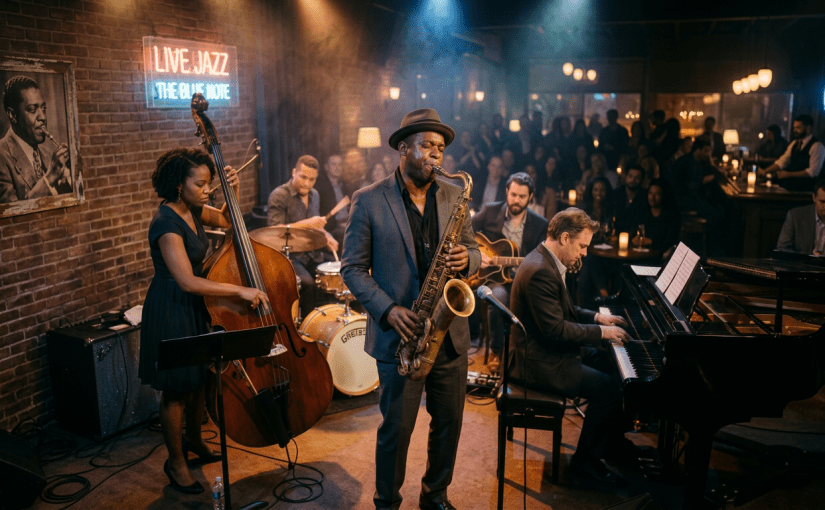
Contemporary jazz is a vibrant, ever-evolving genre that continues to push musical boundaries while honouring its rich traditions.
Today’s jazz musicians are not confined to the classic sounds of swing or bebop; instead they blend influences from hip-hop, R&B, electronic music and global traditions to create something entirely new. This fusion has sparked a modern renaissance, attracting younger audiences and redefining what jazz can sound like in the 21st century.
A key figure in the contemporary jazz movement is Kamasi Washington, whose expansive compositions and spiritual approach have brought jazz back into mainstream cultural conversations.
Washington’s work bridges orchestral jazz with soul and funk, creating immersive listening experiences. Similarly, saxophonist and composer Nubya Garcia has become a leading voice in the UK jazz scene, blending Afro-Caribbean rhythms with contemporary improvisation to craft a sound that feels both rooted and forward-thinking.
Another standout artist is Robert Glasper, a pianist and producer known for seamlessly merging jazz with hip-hop and R&B. His collaborations with major artists across genres highlight how fluid jazz has become in modern music. In a similar vein, Esperanza Spalding has redefined the role of a jazz musician, combining virtuoso bass playing with experimental songwriting and genre-defying performances.
The contemporary jazz scene also thrives on innovation from younger artists. DOMi & JD Beck, a keyboard-and-drums duo, have gained attention for their high performances and tight, intricate rhythms influenced by jazz fusion and electronic music.
One of the most compelling aspects of contemporary jazz is its global perspective. Musicians today often draw on their cultural heritage, creating a more diverse and inclusive soundscape. Artists such as Shabaka Hutchings, who has led multiple influential projects, infuse jazz with African diasporic influences, while others continue to experiment with sounds from across the world.
Improvisation remains at the heart of jazz, but it is being reimagined through modern tools and contexts. Many contemporary musicians incorporate digital production, looping and effects into their performances, expanding what improvisation can look and sound like. This blending of tradition and technology allows for deeply expressive and unpredictable musical sounds.
Ultimately, contemporary jazz is less about fitting into a specific category and more about embracing creativity without limits. The artists shaping the genre today are not just preserving jazz – they are actively reinventing it. As they continue to explore new influences and technologies, contemporary jazz remains one of the most dynamic and exciting areas of modern music.
For listeners, this means there has never been a better time to dive in. Whether through the sweeping compositions of Kamasi Washington, the genre-blurring work of Robert Glasper or the fresh energy of emerging artists, contemporary jazz offers a rich and endlessly rewarding listening experience.
By Norman Thomson
 NGT Music